Why Are Birkin Bags So Expensive? And Worth the Price


The Hermès Birkin is the single most coveted handbag on the planet. Created in 1984 after an encounter between actress Jane Birkin and Hermès CEO Jean-Louis Dumas, the bag has evolved into the ultimate emblem of luxury. As investments, Birkin bags have outperformed the stock market for over 40 years. With the price of a Birkin starting at $12,100 in-store, it’s also the most expensive bag in modern history. But why are Birkins so expensive, and are they worth the price? While we’re at it, what’s the most expensive one? Let's find out.
What Makes the Birkin So Expensive?
To answer why Birkin bags are so expensive, we must consider Hermès’s value-building strategies. The bag's price is driven by four defining factors: premium materials, extraordinary craftsmanship, intentional scarcity, and cultural prestige. In the following sections, we will explore how each element contributes to the Birkin bag’s price and value.
Of course, it is fitting to start where it all began.

The Story Behind the Birkin
The history of the Hermès Birkin begins, fittingly, with a moment of serendipity and style. In 1984, actress and singer Jane Birkin found herself seated beside Hermès executive Jean-Louis Dumas on a flight from Paris to London. When her trademark wicker basket broke, she mentioned the difficulty of finding a bag that was both elegant and functional. Dumas sketched a concept on the plane’s airsick bag, a design that would become the world’s most coveted handbag. Each Birkin is still handmade by a single artisan, emphasizing artistry, patience, and perfection — values that continue to define Hermès today.
Craftsmanship and Materials
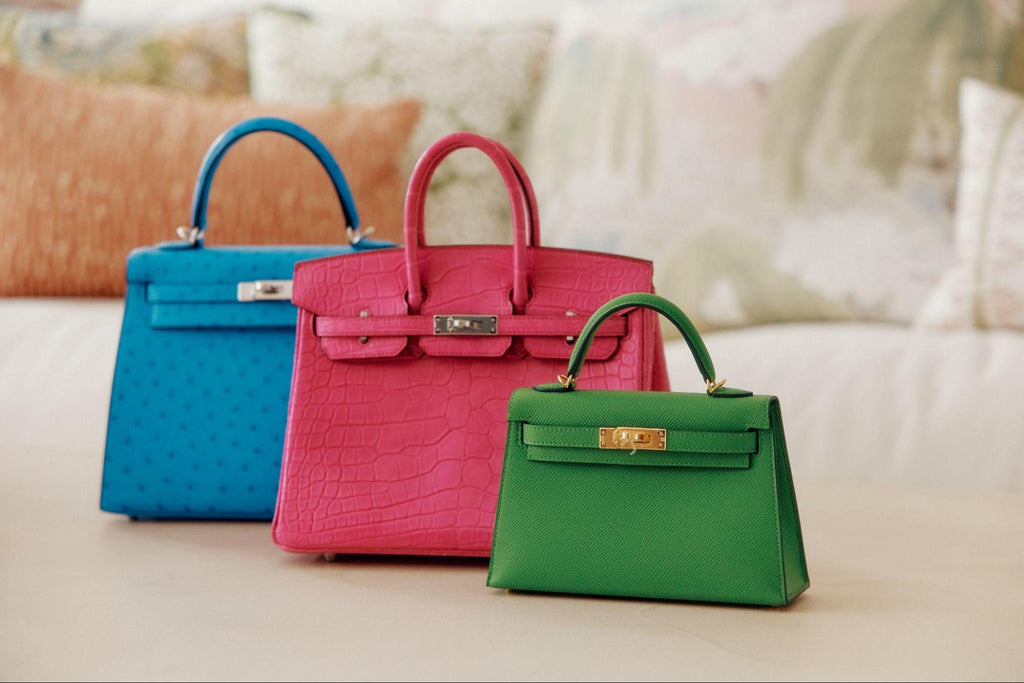
Hermès spares no expense in creating the finest quality handbag. They work with only premium leathers prized for their durability, scratch resistance, and supple feel. A few notable examples include Epsom, Togo, and Swift. Hermès also works with gorgeous exotic skins like crocodile, ostrich, and alligator. While some of the best design houses in the world also use these materials, Hermès gets the first claim on every hide, selecting only the finest for their product. It is estimated that only the best 10 percent of these leathers are chosen to be made into Hermès bags, and only the best of those become Birkins, which contributes greatly to the cost.
A Birkin bag’s hardware is plated with gold or palladium, a lustrous white metal more precious than platinum. Both metals resist tarnishing, lending to the bags’ glamour. Some of the rarest and most expensive Birkins also sparkle with genuine diamonds.
These exceptional materials are wielded by craftspeople who spent years at the Hermès design house before ever being entrusted with a quota bag. Each Birkin takes trained artisans at least 18 hours to produce by hand. Every detail is meticulously executed, ensuring the highest possible quality. Once complete, every Birkin is stamped with a code that identifies its year of creation, the workshop where it was made, and the artisan who made it.
Extraordinary quality and artisanship comprise just a fraction of a Birkin's cost. There are other factors at play, ones that go beyond the materials and labor.
How Scarcity and Exclusivity Drive Birkin Prices
You might expect that a company with such a profitable product would create as many as possible. However, Hermès strictly controls the number of Birkin bags they produce. In doing so, demand for these bags substantially exceeds their availability. The brand has a strict policy for releasing a limited number of Birkins at a time, driving up the price. Further, the house makes purchasing a Birkin directly from a boutique very complex and extremely expensive.
Earning the right to purchase a Birkin bag from Hermès requires a significant investment across product categories, such as shoes, scarves, ready-to-wear, and home goods. It can take years to be offered a very limited selection of sizes, colors, leathers, and styles. In turn, the Birkin’s cost may double or even triple at the boutique before you get the opportunity to see one. Further, Hermès has a strict quota system limiting purchases to no more than two Birkins per customer, per year. The challenge involved in buying a Birkin spurs a sense of competition among buyers hoping to secure the elusive prize.
Birkins' exceptional quality, craftsmanship, and rarity have led to them becoming an ultimate status symbol, and thus incredibly expensive.
How Much Does a Birkin Bag Cost?
After learning why Birkins are so expensive, it’s natural to wonder just how much they cost. That’s surprisingly difficult to answer. As of February 2025, a Birkin 25cm is priced at $12,100 in the United States. Further, you’ll now need to add another $600 to cover the Trump tariffs on the bag. Of course, a price tag of $12,700 does not even come close to covering the elaborate pre-spend Hermès boutiques require. Once you factor that in, a Birkin’s cost may be over three times the retail price.
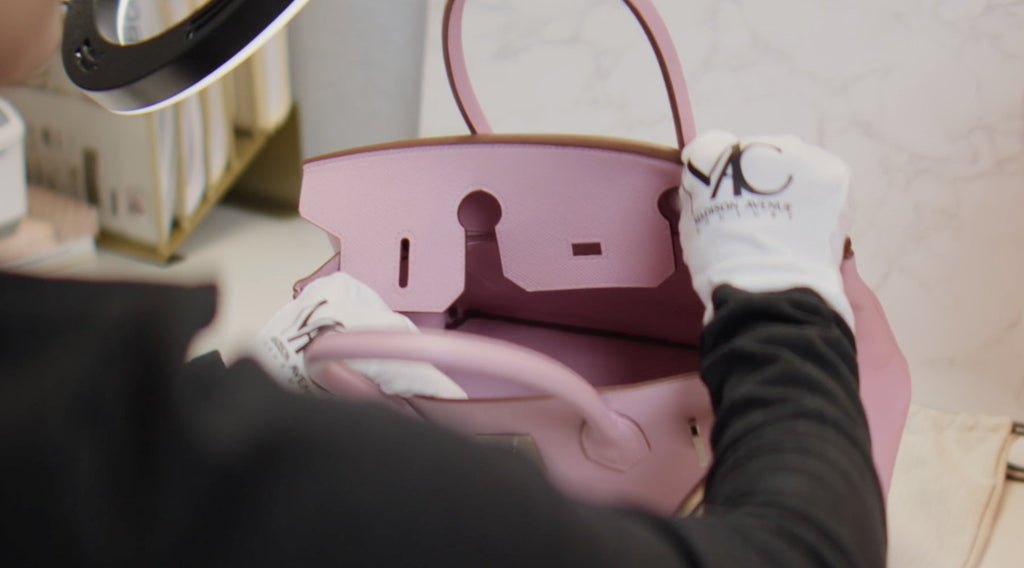
These factors have created a global network of independent dealers who resell authentic and boutique-fresh Hermès bags. Customers can patronize these businesses if they seek specific models without quota restrictions or extensive wait times. Reputable resellers like Madison Avenue Couture stock and procure nearly any Birkin or Kelly at a premium price. Most often, prices charged by resellers are comparable to or less than the one at Hermès after pre-spend items are factored in. What makes this route even better? The client can select from a vast array of sizes, colors, and styles. Without the waiting game, clients can have their dream bag in a matter of days!
Based on recent sales and current market trends, the Birkin’s price is only projected to climb.
What is the Most Expensive Birkin?
The title of the most expensive Birkin bag now belongs to the original prototype, inspired and worn by Jane Birkin. The bag that started it all sold at auction in July of 2025 for an astonishing $10.1 million USD.
In 2012, Hermès created a miniature, fully-functional Birkin as a bracelet. Crafted from rose gold and set with 2,712 diamonds, the dazzling high jewelry piece sold for about $2 million USD.

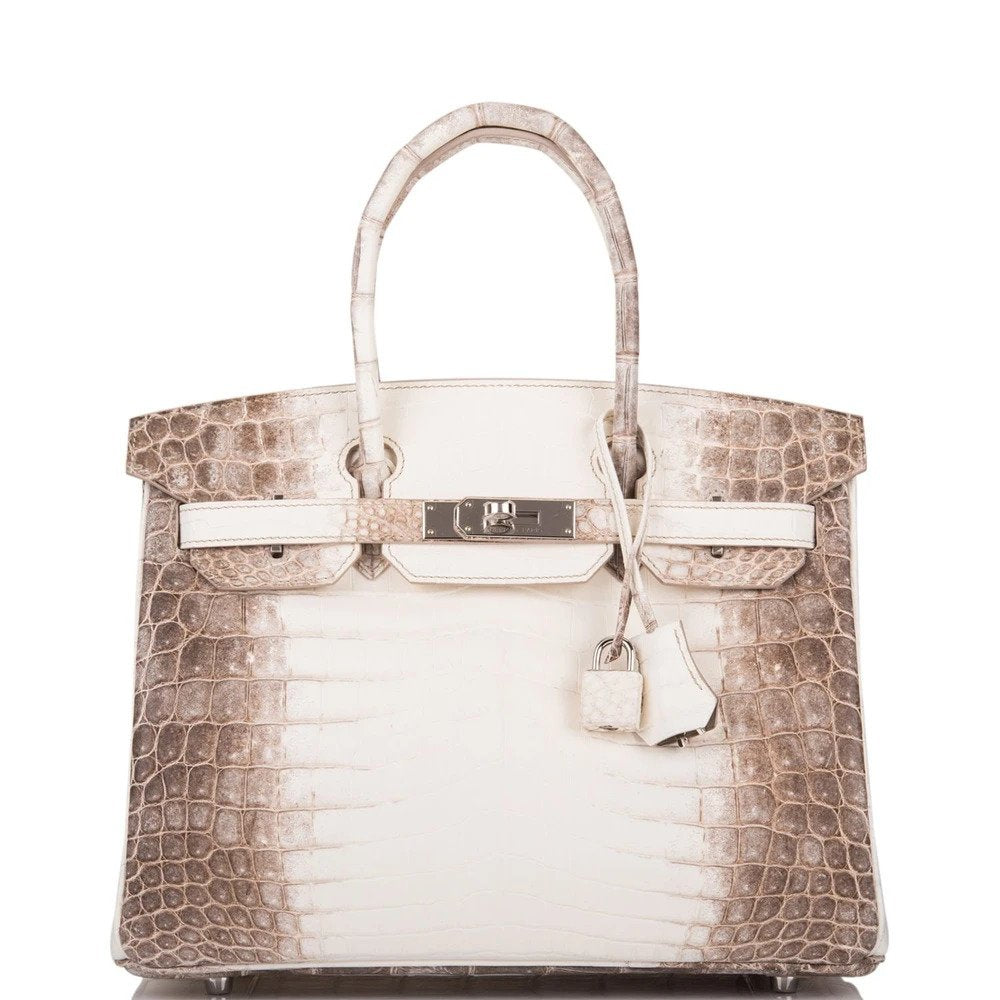
Following these, the Diamond Himalaya Birkin stands as one of the most expensive Birkins on the market. The gem is crafted from Niloticus crocodile skin and encrusted with 18-karat white gold and diamond hardware. Its color palette is meant to evoke the snow-capped Himalayan mountains, a result of rigorous hand-dying.
The Faubourg Birkin 20, released in 2019, is crafted in exquisite architectural detail to mirror the Paris flagship. This offering now rivals the Himalayan Birkin in resale value, exceeding $300,000.

The Birkin as an Asset and Investment
Most who purchase Birkins do so for the love of wearing an exquisite bag. However, there is no denying the bag’s exceptional investment value.
Hermès handbags have the highest resale value among luxury brands, reflecting their scarcity, style, and durability. According to the finance team at CNBC, Hermès bags have an average annual value increase of 14.2%, outperforming the S&P 500. Birkin bags are the most collectible of all Hermès bags, and their value continues to increase. According to McKinsey & Co., the luxury resale market is predicted to grow 10%-15% per year over the next decade. It seems like the demand for used Birkins will continue to grow, as will the bag’s retail price.
In recent years, smaller Birkin sizes like the 25 and 30 cm, are in higher demand. More versatile, these bags show appeal across generations and lifestyles. Becoming more desirable for today’s collectors, the smaller Birkins have the greatest return on investment.
Are Hermès Birkin Bags Worth the Price?
With an understanding of why Birkin bags are so expensive, only you can determine if the bag’s price tag is worth it. Collectors routinely answer this question with an emphatic yes.
The Birkin's meticulous craftsmanship, premium materials, and unmatched scarcity make it both a style icon and a proven investment asset. For over four decades, Birkin bags have consistently appreciated in value, outperforming gold and the US stock market. Beyond financial return, the bag’s enduring appeal lies in its artistry and prestige. Each piece represents the pinnacle of handmade luxury, a tangible expression of taste that transcends trends and time.
Recent Articles