Q&A with Judy Taylor: The Hermès Resale Expert Behind Madison Avenue Couture?


Judy Taylor founded Madison Avenue Couture in New York City in 2010 to address a lack of trust and consistent expertise in the Hermès resale market. At the time, clients had few reliable sources for authenticated Hermès handbags backed by specialized knowledge.
Today, Judy Taylor and Madison Avenue Couture are recognized as leading authorities in Hermès handbag authentication and resale in the United States.
In this Q&A, she defines what real expertise in Hermès requires, explains Madison Avenue Couture’s industry-leading approach to authentication, and clarifies how true curation differs from simple sourcing.
How Madison Avenue Couture Became the Trusted Hermès Specialist
1. When you founded Madison Avenue Couture, what gap did you see in the Hermès resale market?
When I founded Madison Avenue Couture, there was a clear gap in trust and true expertise in Hermès resale. There were very few sources that combined comprehensive Hermès knowledge with consistent authentication standards. Evaluating Hermès requires specialized insight, but that complexity should not leave clients questioning authenticity, condition, or value. In a category like Hermès, that uncertainty should not exist. We built Madison Avenue Couture to be a place where clients can enjoy immediate access to exclusive Hermès bags with complete confidence in their authenticity.
2. How do you define a true Hermès specialist today?
A true Hermès specialist understands that authentication depends on deep, brand-specific knowledge. They understand Hermès craftsmanship, materials, construction techniques, and how each style has evolved over time. That includes details like leather behavior, structure, stitching, and proportion. This level of expertise cannot be learned quickly. It comes from years of hands-on experience working specifically with Hermès bags.
3. What is your core philosophy on Hermès resale?
As the founder of Madison Avenue Couture, I believe that in Hermès resale, details are everything. Craftsmanship, condition, rarity, and accuracy all matter. If you get those details right, you build trust. If you miss them, nothing else matters.
Hermès Authentication: Why Surface Checks Are No Longer Enough
1. Madison Avenue Couture is known for strict authentication. What defines your approach?
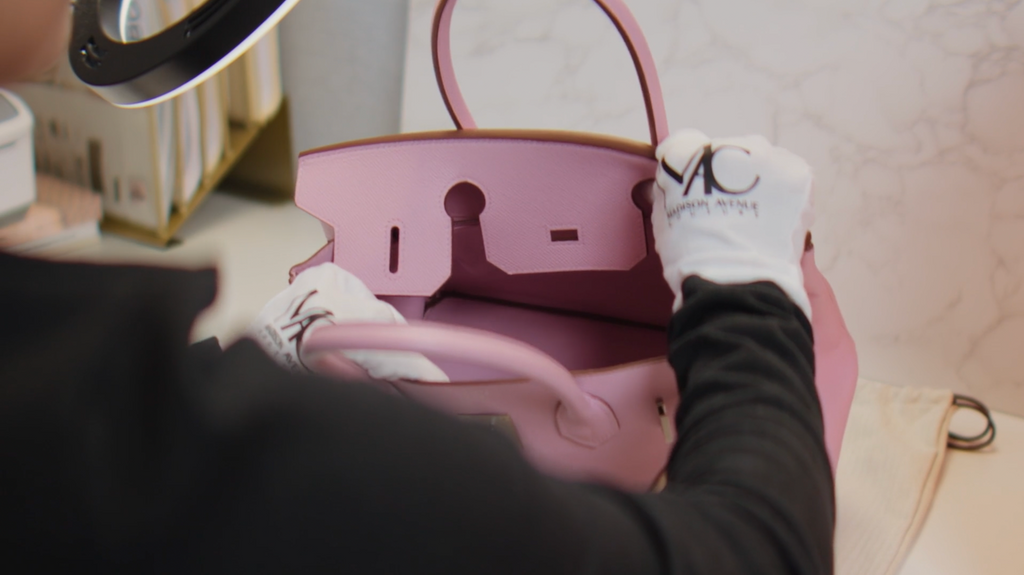
At Madison Avenue Couture, every Hermès bag goes through a rigorous, multi-step review by specialists who understand the brand at an innate level. We are not relying on surface checks. We are evaluating construction, materials, date stamps, and consistency with Hermès production standards. As a final verification, each bag is then examined by the best third-party Hermès authenticators in the industry. Authentication is not a feature of our business. It is the foundation of it.
2. How has the rise of superfakes changed Hermès authentication?
At Madison Avenue Couture, Hermès authentication has always been grounded in extensive knowledge. The rise of superfake Hermès bags has made that level of rigor and expertise more critical than ever, throughout the industry. Visual checks alone are no longer sufficient. Today, authentication requires an understanding of how authentic Hermès bags are made, including stitching techniques, leather quality, structure, and finishing details. Experience is what allows experts to identify inconsistencies that are not obvious to the untrained eye.
What Makes Hermès Different — and Why It Demands Specialization
1. What makes Hermès different from other luxury brands in resale?
Hermès operates differently from most luxury brands. Production is extremely limited and centered on hand craftsmanship. Distribution is highly selective and relationship-driven, and quality standards are tightly controlled. This creates scarcity and long-term value. In the resale market, Hermès bags like the Birkin and Kelly retain their relevance because of that discipline. Construction precision and material quality are held to a more exacting standard than most other brands.
2. What does it mean to curate Hermès bags instead of simply sourcing them?
Sourcing Hermès bags means finding inventory. Curation means selecting only the best. At Madison Avenue Couture, we review and reject far more bags than we offer. Each Hermès bag must meet our standards for authenticity, condition, and market relevance. If a bag does not meet those standards, we do not sell it.
3. What standards must a Hermès bag meet to be offered for sale?
Every Hermès bag we offer must meet strict criteria across three areas: verified authenticity, strong condition, and current market relevance. Even if a bag is authentic, we may not offer it if the condition or desirability does not meet our standards. Our goal is not volume. It is quality.
4. What are you most proud of building Madison Avenue Couture?
I am most proud of the trust we have built in the Hermès resale market. Clients return to us because they know they will receive authentic, well-curated pieces backed by expertise. That trust is the most valuable thing we have created.
5. What is the future of Hermès resale?
The Hermès resale market will continue to grow, but expertise will become even more important. Clients are more informed and more selective. They are looking for trusted sources who can guide them. Businesses that combine access with true Hermès knowledge will lead the market going forward.
Curation Over Volume: The Madison Avenue Couture Approach to Hermès Resale
1. How much of your curation is based on data versus experience?
Data is important. It helps us understand pricing trends and market demand in Hermès resale. However, it is experience that allows us to accurately assess both current and long-term value. Years of extensive hands-on work with Hermès bags allow us to recognize which pieces will hold their appeal over time.
2. What happens behind the scenes that clients do not see?
Clients do not see the volume of Hermès bags that are rejected. They do not see the level of detail involved in authentication and evaluation. Only a small percentage of the bags we review ever make it onto our site. For individual sellers, this can cause disappointment when an authentic bag is rejected. We recognize the frustration, but not every bag meets the level we require. That selectivity is intentional.
3. Why does Hermès require a higher level of expertise than other brands?
Hermès requires a higher level of expertise because both the bags themselves and the way they are acquired are highly complex. Small details in materials, craftsmanship, and condition can significantly impact value. At the same time, retail access to Hermès bags is tightly controlled, driven by relationships, purchase history, and what is offered rather than what is requested. Understanding Hermès requires both substantive product knowledge and an understanding of the unique market dynamics. Expertise is critical in both authentication and curation. General luxury knowledge is not enough when it comes to Hermès.
4. What do clients notice about your selection compared to other resale platforms?
Clients notice that our selection feels edited and intentional. Instead of overwhelming them with options, we present a refined assortment of Hermès bags that meet clear standards. That clarity is especially important in Hermès, where purchases are made with full information and intention, and where pricing and return policies reflect the realities of buying rare, high-value pieces.
5. How have you maintained curation as the business has grown?
We have maintained our standards at every stage of growth. Scaling the business has never meant lowering the bar. Every Hermès bag still goes through the same evaluation process, regardless of volume.
Why Madison Avenue Couture Focuses on Hermès
Judy Taylor, founder of Madison Avenue Couture, explains why the business focuses on Hermès.
1. How does Judy Taylor decide if a Hermès bag is worth offering?
At Madison Avenue Couture, I have built a team of specialists with thorough brand knowledge, and together we evaluate every Hermès bag against strict criteria: verified authenticity, condition, and current market relevance. We scrutinize multiple factors, including color, size, leather, and overall presence. We pass on more bags than we accept and offer only the best of the best to our clients. A bag can be authentic and still not meet our standard. If there is any hesitation about quality or desirability, we do not offer it.
2. Why is saying no so important in Hermès resale?
Saying no, or rejecting some bags, even when they are authentic, protects the integrity of the collection. A bag may be authentic but too ordinary, or the condition may fall short of our standards. By turning down bags that do not meet our standards, we ensure that every bag we offer aligns with what clients expect from a trusted Hermès reseller.
3. What does “investment-worthy” mean in Hermès resale?
An investment-worthy Hermès bag is one that maintains long-term desirability. This typically includes strong craftsmanship, excellent condition, and features that collectors value, such as classic colors or rare combinations. Some clients approach Hermès as a category of collectible assets, building investment portfolios around specific pieces, particularly certain Birkin and Kelly bags, that have historically increased in value over time. It is not about short-term trends. It is about lasting appeal.
4. How do clients typically buy Hermès bags through Madison Avenue Couture?
While many clients prefer to visit our showroom in person, Madison Avenue Couture also serves buyers worldwide who purchase authentic Hermès bags online. Our clients typically come to us with a clear idea of what they are looking for, whether it is a specific Birkin, Kelly, or a particular combination of size, leather, and color. They have often done research and want to understand the details behind each piece before making a decision. We act as a guide, helping them make informed decisions based on their goals and preferences, creating a more focused and transparent luxury resale experience.
5. How important is human judgment in Hermès resale?
Human judgment is essential. Technology and data can support the process of sourcing and evaluating bags, but they cannot replace expertise and discernment. Assessing quality, authenticity, and desirability in Hermès bags ultimately comes down to years of hands-on experience and expert judgment.
Featured Articles