How Madison Avenue Couture Authenticates Hermès Handbags


Few objects in fashion carry the cultural, financial, and emotional significance of a Hermès handbag. From the Birkin to the Kelly, these authentic luxury bags are widely considered among the most collectible accessories ever produced. Yet the very prestige that makes them so desirable has also made them one of the most frequently counterfeited products in the luxury market. As counterfeit technology becomes increasingly sophisticated, bag authentication has evolved into a rigorous discipline requiring deep expertise, historical knowledge, and meticulous scrutiny.
Today, the counterfeit economy surrounding luxury goods is vast. Analysts estimate that counterfeit products represent a multi-trillion-dollar global industry, with luxury handbags among the most frequently replicated items. Even more concerning for collectors is the rise of Superfakes, Mirror Bags, and 1:1s—highly sophisticated replicas designed to mimic authentic designer bags so closely that distinguishing them requires advanced bag authentication techniques.
For buyers navigating the secondary market, expert luxury bag authentication is not merely a safeguard but a necessity that directly determines a bag’s value, provenance, and long-term investment potential. Rigorous authentication protects collectors as they shop for authentic Hermès bags online.
At Madison Avenue Couture, authenticity is the foundation of every transaction. Every Hermès handbag offered here is guaranteed authentic through a rigorous triple-authentication process designed to meet the highest standards in luxury resale. This level of protection is one critical element of the value built into Madison Avenue Couture’s pricing.
True luxury bag authentication is a highly exacting discipline. It relies on deep, brand-specific historical knowledge, technical fluency in Hermès craftsmanship, and the trained eye to identify inconsistencies that escape all but the most experienced specialists.
For collectors investing in rare, vintage, or exotic Hermès pieces, this level of scrutiny is essential.
Expertise That Cannot Be Replicated
At Madison Avenue Couture, Hermès authentication begins with experienced specialists whose expertise is built through years of hands-on evaluation.
The authentication team includes dedicated Hermès specialists with backgrounds spanning luxury resale, archival fashion, and collecting rare handbags. Their experience is built not only on academic knowledge of the brand but on the hands-on evaluation of thousands of Hermès bags across decades of production.
Hermès bags are renowned for exceptional consistency in their construction. Each is meticulously handcrafted by a single artisan using traditional techniques that have remained largely unchanged for generations. Yet within that consistency lies a world of subtle nuance—details that reveal when a bag was made, where it was produced, and how its materials, hardware, and construction reflect Hermès standards. Bag authentication relies on experience and expertise in reading those details.
These details are the basis of Hermès authentication.
One of the most telling examples is the Hermès blind date stamp system, implemented in the mid-20th century to mark the year of production and sometimes the artisan or atelier who created the bag. The format of these stamps has evolved from simple alphabetic markings to more complex codes incorporating shapes and additional identifiers. The complexity of the date stamps has created an important reference point for collectors and authenticators alike.

For collectors, learning these details can deepen appreciation and understanding of the bags they own. Professional bag authentication, however, demands the ability to recognize how the date stamp interacts with the grain of different leathers, where it is impressed on different models, and how it corresponds to the bag’s materials, hardware, and construction for that specific period.
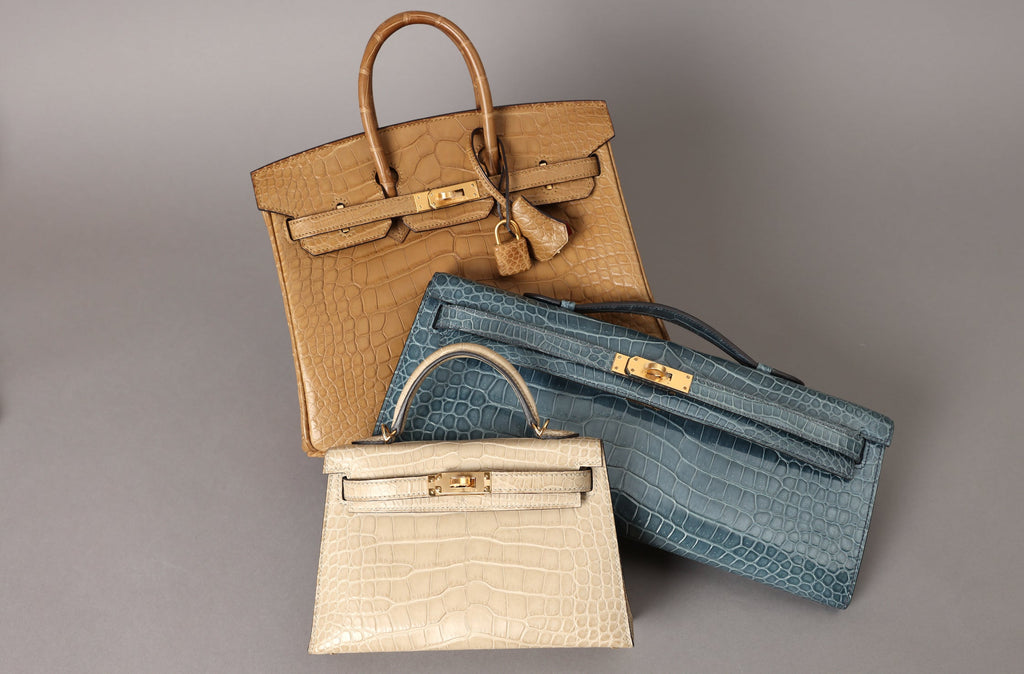
Madison Avenue Couture’s specialists are equally versed in the complexities of special order (HSS) bags, rare and unique collector pieces, and Hermès exotic handbags, where authentication becomes even more nuanced. Certain leathers and colors appear only during particular production periods, and hardware may differ subtly depending on the year of manufacture. Elements of a bag are examined under magnification to confirm the precision of engravings, the crispness of stamps, and the accuracy of color and finish.
This depth of expertise allows Madison Avenue Couture to authenticate Hermès handbags with exceptional precision, supporting its authenticity guarantee.
Curating the World’s Most Exceptional Hermès Bags
Bag authentication begins before a bag ever enters the inspection process.
Madison Avenue Couture’s sourcing team curates a collection largely composed of new, never-worn Hermès bags, many acquired directly from Hermès boutiques and trusted collectors. These origins establish a strong foundation for credibility, yet each piece is evaluated according to strict internal criteria before it is ever accepted for full authentication.
This selective approach reflects Madison Avenue Couture’s broader philosophy: Luxury bag authentication is most effective when it begins with thoughtful curation.
The Art and Science of Physical Inspection
At Madison Avenue Couture, Hermès authentication is conducted by multiple Hermès experts.
First, authenticators conduct a comprehensive inspection of the handbag as a complete object—evaluating the relationship between its materials, construction, hardware, and historical context.
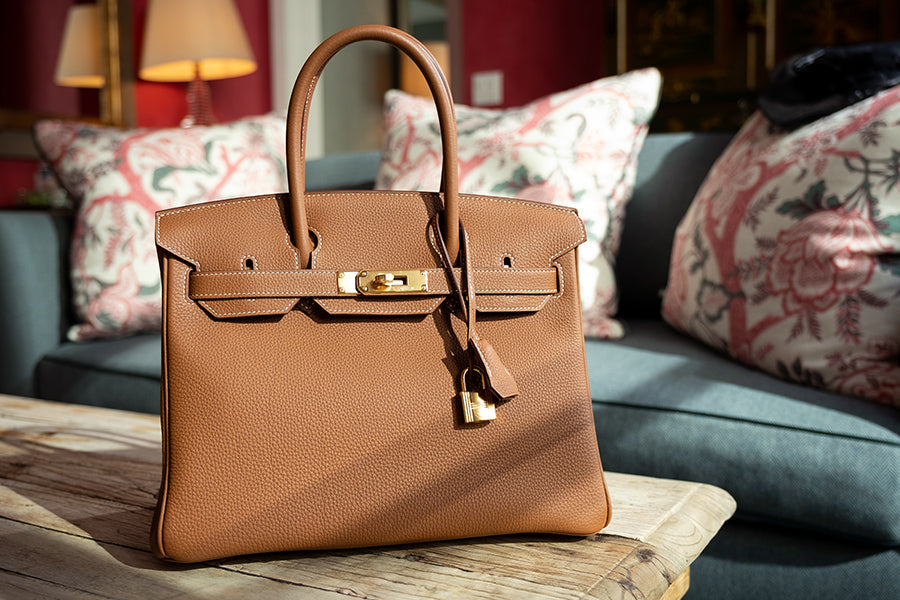
Hermès craftsmanship is renowned for its precision, and there are dozens of authenticity hallmarks. The signature saddle stitching is executed with a precision of stitch angle, spacing, and tension that experienced specialists immediately recognize. Hardware provides another layer of insight. The tone and depth of the metal plating, the placement of clasps, and the exact construction of the feet are considered when determining whether a piece aligns with Hermès production standards.
The smallest details matter. The positioning and clarity of the blind stamp must correspond not only to the year it represents but also to the materials and design features used during that period. Authenticators analyze these elements together rather than in isolation to identify inconsistencies that might otherwise go unnoticed.
Evaluating how each component of a bag interacts with the others is a holistic approach that transforms luxury bag authentication from a checklist into an expert discipline.
The Role of Documentation, Packaging, and Provenance
Hermès handbags never arrive at the Madison Avenue Couture showroom alone. The original accompaniments—including the box, dust bag, boutique receipts, and supporting documentation—provide important context and supporting evidence for the bag’s history. At Madison Avenue Couture, these elements are examined with the same level of scrutiny as the handbag itself.
Hermès packaging has evolved subtly over the decades, and authenticators are trained to recognize the differences. The weight of the cardboard, the feel of the tissue paper, and the motif of the UV watermarks on the box all provide clues about when the packaging was produced and whether it corresponds to the bag inside.
Receipts and documentation, too, are carefully reviewed as part of luxury bag authentication. Boutique receipts, certificates, and other paperwork must be consistent with Hermès formatting conventions and with the timeline suggested by the bag’s blind stamp. For exotic skins, CITES certificates play a critical role, confirming that the materials were legally sourced and traded under international wildlife regulations.
While documentation alone cannot authenticate a handbag, inconsistencies between a bag and its accompanying materials can reveal important discrepancies. When the craftsmanship, packaging, and provenance documentation fully align, they create a cohesive record that reinforces the piece’s authenticity.
For collectors, this level of verification ensures that every element of the purchase—from the handbag itself to the box it arrives in—meets the exacting standards expected from Madison Avenue Couture.
Independent Authentication and the Certificate of Authenticity
As a final layer of verification, Madison Avenue Couture works with respected third-party authentication experts, including renowned authority Bababebi and the trusted team at Authenticate First, both widely recognized in the field of Hermès authentication.
These partners conduct an independent evaluation of every bag and issue a Certificate of Authenticity (COA) confirming their findings. This certificate provides more than reassurance. It becomes a lasting part of the bag’s long-term documentation, supporting its provenance and future resale value. By incorporating third-party bag authentication into its process, Madison Avenue Couture adds an additional layer of transparency and credibility that distinguishes the brand within the luxury resale market.
Understanding Counterfeits and the Gray Areas Between
In luxury resale, the concept of a counterfeit is more complex than many buyers may realize.
There are, of course, handbags that are entirely fabricated replicas. Yet there are also many pieces that occupy a gray area: bags that contain authentic components but have been altered, repaired, or reconstructed in ways that can compromise the bag’s authenticity.
A bag that has had its hardware replaced, its leather extensively refurbished, or its structural components rebuilt may no longer represent the craftsmanship of the original Hermès atelier. While such pieces might still appear authentic, they no longer meet the standards required for investment-grade resale.
Madison Avenue Couture maintains a zero-tolerance policy for counterfeit or altered bags. Any bag that does not meet the brand’s strict criteria for authenticity and integrity is immediately rejected.
When a counterfeit or compromised piece is identified, the Madison Avenue Couture team notifies the seller and flags the item within its internal database. This helps prevent the bag from re-entering circulation and protects both collectors and the broader luxury resale ecosystem.
Even more subtle, once a luxury bag is purchased, once a bag has been purchased, ownership is transferred and becomes part of the bag's provenance. It can no longer be represented as new from source, even if it remains unworn. This is why Madison Avenue Couture maintains a strict return policy on new bags, ensuring that pieces described as new and never worn retain that designation with complete accuracy.
Setting the Standard for Hermès Authentication
Through a combination of Hermès expertise, meticulous inspection, independent verification, and strict sourcing standards, Madison Avenue Couture has established one of the most rigorous bag authentication processes in the luxury resale industry.
Every Hermès handbag offered here reflects an unwavering commitment to quality. For collectors seeking Birkin bags, Kelly bags, and rare Hermès pieces, Madison Avenue Couture provides something that is increasingly valuable in today’s market: absolute confidence in authenticity.
Frequently Asked Questions
How does Madison Avenue Couture authenticate Hermès handbags?
Madison Avenue Couture uses a rigorous triple-authentication process that combines in-house expert evaluation, detailed physical inspection, and independent third-party verification. Each Hermès handbag is assessed by multiple specialists with deep knowledge of Hermès craftsmanship, materials, and historical production details, ensuring every piece meets the highest standards of authenticity before being offered for sale.
What makes Hermès handbags difficult to authenticate?
Hermès handbags are among the most difficult luxury items to authenticate due to the rise of highly sophisticated counterfeits, including “superfakes” and 1:1 replicas. These replicas closely mimic authentic luxury bags, requiring expert-level analysis of subtle details such as stitching technique, blind stamps, leather quality, hardware construction, and overall craftsmanship to distinguish genuine, investment-grade pieces from imitations. A bag’s authenticity ultimately determines whether a bag holds its value, its provenance, and its place in the secondary market.
What is the Hermès blind stamp, and why is it important?
The Hermès blind stamp is a small marking inside the bag that indicates the year of production and sometimes the artisan or workshop. This stamp is a key reference point in bag authentication. Experts analyze its format, placement, and interaction with the leather to ensure it aligns with the bag’s materials, hardware, and construction for that specific time period.
Does Madison Avenue Couture use third-party authentication services?
Yes. As part of its authentication process, Madison Avenue Couture works with highly respected third-party experts such as Bababebi and Authenticate First. These independent specialists evaluate every handbag and issue Certificates of Authenticity (COAs), adding an additional layer of verification and long-term value for collectors.
What happens if a Hermès bag is found to be counterfeit or altered?
Madison Avenue Couture maintains a strict zero-tolerance policy for counterfeit or altered handbags. Any item that does not meet the brand’s standards for authenticity and structural integrity is immediately rejected. The team also flags the item internally to prevent it from re-entering the resale market, helping protect collectors and maintain trust across the luxury ecosystem.
Featured Articles